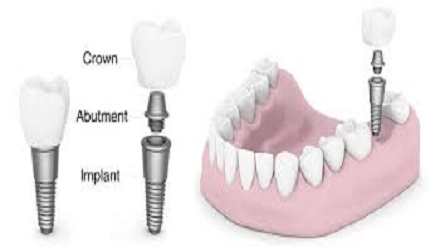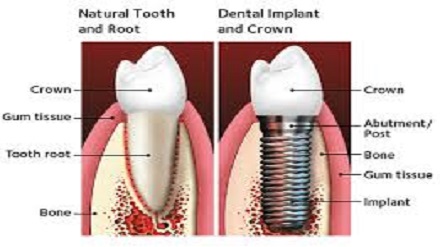
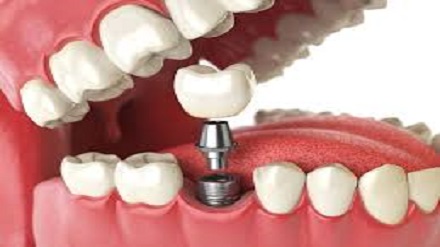
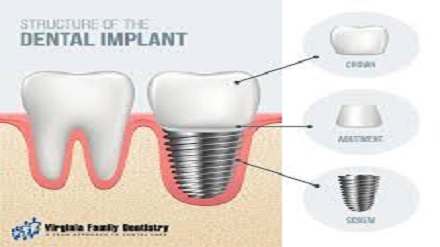
Historically, there have been two different types of dental implants: (1) endosteal and (2) subperiosteal. Endosteal refers to an implant that is "in the bone," and subperiosteal refers to an implant that rests on top of the jawbone under the gum tissue. Subperiosteal implants are no longer in use today because of their poor long-term results in comparison to endosteal dental implants. While the primary function of dental implants is for teeth replacement, there are areas in which implants can assist in other dental procedures. Due to their stability, dental implants can be used to support a removable denture and provide a more secure and comfortable fit. In addition, for orthodontics procedures, dental mini-implants can act as temporary anchorage devices (TAD) to help move teeth to a desired position. These mini-implants are small and temporarily fixed to bone while assisting in anchorage for teeth movement. They are subsequently removed after their function has been served. For patients who have lost all their teeth due to decay or gum disease of the upper and/or lower arch, an option is available to provide a very stable and comfortable prosthesis using a minimal number of implants. One such is example is the "All-On-4" technique that was named by implant manufacturer Nobel Biocare. This technique gets its name from the idea that four implants can be used to replace all teeth in a single arch (upper or lower). The implants are strategically placed in areas of good strong bone, and a thin denture prosthesis is screwed into place. The All-On-4 technique provides teeth replacement that is stable (not removable) and feels like natural teeth compared to the older method of traditional (removable) complete dentures. Without a doubt, implant dentistry has allowed for more treatment options to replace single and multiple missing teeth with long-term stability and contributes to improved oral health.
In contrast, while there have been previous efforts to standardize dental diagnostic terms, they have not achieved widespread acceptance, and they have fallen short in their comprehensiveness or availability. Early on, it was noted that terms for oral diseases within the ICD terminology were insufficiently precise and not consolidated within the ICD volume. Consequently, the ICD-DA (application of the ICD to Dentistry and Stomatology) was added at the time of the eighth revision of the ICD in 1965.4 Nevertheless, recent articles have highlighted the inadequacy of the existing ICD terminology as it pertains to oral diagnosis documentation.5 In the United States, organized dentistry has become increasingly involved in the movement to codify diagnostic terms. Since the early 1990s, the American Dental Association (ADA) has led the creation of SNODENT, the Systematized Nomenclature for Dentistry. Where ICD is a terminology, SNODENT is an ontology. The distinction between the two is that a terminology is a set of terms representing the concepts within a particular field, while an ontology represents the relationships between these concepts. SNODENT is comprised of diagnoses, signs, symptoms, and complaints6 and currently includes over 6,000 terms. However, unlike its available medical counterparts (SNOMED and ICD-9), SNODENT has not yet been finalized and is not available for use by general practitioners or dental schools. To address the critical need, some groups have independently generated dental diagnostic terminologies.7,8 However, there is no supporting literature on whether they have served their purpose well,9 and among these, only the Toronto codes have been systematically evaluated.1 In 1998, the University of California, San Francisco (UCSF) created Z codes based upon the Toronto codes10 and the existing ICD version. In 2007 Creighton University made further modifications to these Z codes.